
Publications are a lucrative avenue for revenue generation and sustainability. Through compelling content encompassing industry insights, research findings, and timely updates, associations can captivate a broader audience, boost their membership base, and monetize their expertise effectively. Learn how associations and chambers are exploring the potential of publications to drive growth, attract stakeholders, and ensure long-term financial viability.
- Enhancing Sustainability and Revenue Generation through Research Publications
- Kwara Chamber Utilizes Publications To Drive Revenue
- From Contacts to Contracts: How EAGC Turned a Business Directory into a Trade Engine
Ethiopian Economics Association
EEA – State of the Ethiopian Economy
Enhancing Sustainability and Revenue Generation through Research Publications
Since its inception in 1991, the Ethiopian Economics Association (EEA) has made significant strides in contributing to the understanding of the Ethiopian economy. One of its standout achievements is the publication of a comprehensive research report that delves into the condition and performance of the economy. Not only has this report become the EEA’s flagship publication, but it has also emerged as a vital revenue source for the association, ensuring its sustainability and furthering its mission.
The EEA’s research report is a testament to the dedication and expertise of its team of employees. Utilizing a sound conceptual and methodological approach, the report presents a holistic overview of the Ethiopian economy, examining various sectors and their influencing factors. What sets this publication apart from others is its independence and comprehensive coverage, encompassing macroeconomic indicators and a wealth of data on relevant aspects of the Ethiopian economy. As a result, the report caters to a diverse audience, including policy makers, program planners, investors, scholars, and other stakeholders.
Previously, the EEA released an annual report that featured an analysis of macroeconomic indicators and an in-depth exploration of specific economic sectors. However, starting from 2020, the association transitioned to a biannual publication schedule for its State of the Ethiopian Economy report. This strategic shift has allowed the EEA to provide more insights into the economic landscape. To access the report, non-members are required to pay a fee per edition, while members enjoy a discounted rate. Three months after publication, the report is made freely available on the EEA website, ensuring wider accessibility.
To amplify the reach of the report, the EEA actively promotes it at its annual international conference held every July and leverages social media platforms to engage with a broader audience. Additionally, the association distributes a select number of copies to influential Ethiopian policymakers, such as state ministers, further bolstering its impact. The report is disseminated both in electronic and hardcopy formats, catering to the preferences of diverse readers.
The EEA’s commitment to sustainability and revenue generation through its research publications is commendable. By leveraging the value and insights derived from its reports, the association ensures the continued success of its mission. It is worth noting that the EEA’s dedication to economic research extends beyond the flagship report. The association also disseminates its research findings through various publications such as the Annual Report on the Ethiopian Economy, Ethiopian Journal of Economics, Quarterly Economic Report, and working papers. Furthermore, the establishment of regional chapters in collaboration with universities expands the EEA’s reach and impact, fostering economic research at both national and regional levels.
By investing in research publications, the EEA not only secures its sustainability but also contributes to the collective understanding of the Ethiopian economy. With their unwavering commitment to knowledge dissemination, the association remains at the forefront of economic research, fostering growth and development in Ethiopia.
For more information about the EEA’s publication or to engage further, interested parties are encouraged to contact Mengistu Ketema, PhD, Chief Executive Officer of the Ethiopian Economics Association, via email at mengistuket@gmail.com.
About EEA
The Ethiopian Economics Association (EEA) was established as a non-profit, non-political and non-religious professional association in 1991. Since inception, EEA has been actively engaged in economic research, training and the organization of international, national and regional conferences and round table discussions on the Ethiopian economy. To explore the Ethiopian Economics Association and its wide range of activities, including research reports, conferences, and publications, please visit their official website at https://eea-et.org/.
Kwara Chamber of Commerce, Industry, Mines, and Agriculture (KWACCIMA)
Kwara Chamber Utilizes Publications To Drive Revenue
Kwara Chamber – BIZVOICE magazine, May-July 2022
Kwara Chamber of Commerce, Industry, Mines, and Agriculture (KWACCIMA) in Nigeria has taken significant strides in ensuring its sustainability and financial growth through a strategic utilization of its publications. One such publication is the BizVoice magazine, which was launched in 2021, replacing its predecessor, the Voice of KWACCIMA. With a professional tone, BizVoice serves as a quarterly business magazine that not only highlights the Chamber’s activities but also presents business news, exclusive interviews with industry leaders, and relevant advertisements. Its content quality has positioned BizVoice as a trusted and sought-after magazine within the local business community.
To test the demand from readers, KWACCIMA initially printed 250 copies for the first issue. However, recognizing the magazine’s popularity, subsequent issues have seen a rise in print runs to 350-400 copies. This expansion demonstrates the Chamber’s commitment to satisfying the growing appetite for insightful business content.
A diversified revenue model forms the foundation of KWACCIMA’s sustainable approach. BizVoice generates various streams of income, including advertisements, interviews with entrepreneurs introducing new products, announcements, and product advertising. In addition, a dedicated public relations executive, who is a KWACCIMA member, voluntarily contributes to the development of BizVoice’s content. Through this revenue-generating approach, BizVoice contributes approximately 20% to the Chamber’s annual income.
KWACCIMA understands the importance of strategic promotion in driving revenue and expanding its readership. The Chamber actively promotes BizVoice through local radio stations and leverages social media platforms to engage a wider audience. To reach key stakeholders, KWACCIMA also distributes copies of BizVoice to local government offices, foreign embassies in Nigeria, and the international airports in Lagos, Abuja, and Ilorin. By adopting these multifaceted promotional strategies, the Chamber ensures maximum exposure for its publication, enhancing its reputation and market presence.
While BizVoice is currently available at no cost, KWACCIMA has strategic plans to monetize it in the near future. This move enables the Chamber to generate additional revenue and emphasizes the magazine’s value and exclusivity. The upcoming transition to a paid model will provide KWACCIMA with a sustainable income stream to support its operations and further enhance the quality of BizVoice.
For further information on BizVoice magazine and its offerings, interested parties can contact Olalekan Ayodimeji, President of Kwara Chamber of Commerce, Industry, Mines, and Agriculture, via email at ayodimejifatai@gmail.com.
About KWACCIMA
Established in 1965, the Kwara Chamber of Commerce, Industry, Mines, and Agriculture (KWACCIMA) is a voluntary non-governmental organization comprised of businesses and professionals dedicated to advancing the civic, commercial, and industrial progress of Kwara State. KWACCIMA serves as the voice of business in the region and plays a pivotal role in promoting and safeguarding trade and industry. It acts as a central hub for gathering and disseminating vital information on regulations, tariffs, trade opportunities, and other business-related matters affecting both domestic and foreign markets. As an active member of the Coalition of Northern Chambers of Commerce, Industry, Mines, and Agriculture (CONSCCIMA) and the Nigerian Association of Chambers of Commerce, Industry, Mines, and Agriculture (NACCIMA), KWACCIMA consistently contributes to the growth and development of the business community. Also, KWACCIMA is the coordinator for the Kwara Coalition of Business and Professional Associations (KWACOBPA), further solidifying its position as a key influencer and enabler of business progress in the region. For more comprehensive information about the Kwara Chamber of Commerce, Industry, Mines, and Agriculture, please visit https://m.facebook.com/p/Kwaccima-100076747200817/
From Contacts to Contracts: How EAGC Turned a Business Directory into a Trade Engine
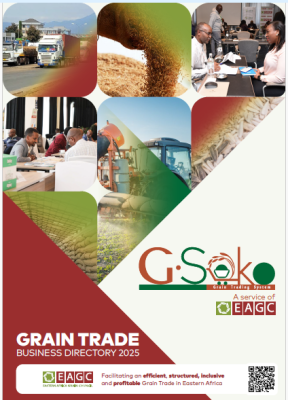
When grain traders in Eastern Africa struggled to identify reliable partners, the Eastern Africa Grain Council responded with a simple but powerful solution: trusted information.
The G Soko Grain Trade Business Directory has evolved from a reference tool into a core market resource that strengthens trade, reduces risk, and generates revenue for the association. EAGC has long supported market linkages through business-to-business engagements and its digital trading platform. While these efforts expanded access to markets, they also exposed a persistent constraint. Businesses lacked reliable information about potential partners, and this gap often led to failed transactions and weakened trust.
EAGC addressed this challenge by developing a vetted and structured directory of market actors. Launched in 2017, the Directory provides verified profiles of companies across the grain value chain, including farmers, traders, millers, warehouse operators, input suppliers, and financial service providers. By organizing listings by sector, service, and geography, it enables businesses to identify credible partners quickly and transact with greater confidence across markets in Burundi, Kenya, Malawi, Rwanda, Tanzania, and Uganda.
A rigorous vetting process anchors the credibility of the Directory. EAGC verifies all listed businesses to ensure reliability and transparency. For non-members, this includes site visits and third-party recommendations. This approach elevates the Directory from a static listing to a trusted market validation tool that reduces risk and supports more efficient trade.
Beyond facilitating transactions, the Directory strengthens EAGC’s financial sustainability. The Council designed a diversified revenue model that aligns member value with income generation. Non-members pay for advertising placements while members benefit from free listings, reinforcing the value of membership. EAGC also generates revenue through sales of the publication and sponsorship opportunities linked to the annual launch at the African Grain Trade Summit. This approach converts a core service into a recurring revenue stream.
The impact is clear. In 2025, the Directory contributed to approximately 40 percent of new member acquisition, demonstrating its effectiveness as both a growth and engagement tool. EAGC supports this impact through a coordinated communication strategy that includes digital outreach, events, and direct engagement with stakeholders. The African Grain Trade Summit further amplifies visibility, positioning the Directory as a flagship industry resource.
Today, the Directory delivers three core outcomes. It builds trust by verifying market actors. It facilitates trade by connecting businesses across the value chain. It generates revenue by offering a sustainable and market-relevant service. In doing so, EAGC demonstrates how associations can move beyond convening to deliver solutions that strengthen entire markets.
For further information about the EAGC Grain Trade Business Directory, interested parties can contact Gerald Masila, EAGC Executive Director at gmasila@eagc.org or grains@eagc.org.
About East African Grain Council
Founded in 2006, EAGC represents more than 700 businesses across ten countries in Eastern Africa. The Council strengthens market systems through improved information, capacity building, trade facilitation, and policy advocacy. By aligning member services with market needs, EAGC continues to advance a more structured, transparent, and competitive grain sector.
To obtain more comprehensive information about the Eastern Africa Grain Council, please visit their website at https://eagc.org/.