Risk assessments are an essential element of any organization’s compliance program. The Principles on Combating Corruption for Business Associations and Chambers of Commerce (“Principles”) advise business membership organizations (“Associations”) to...
Context Private Sector in Nepal: Following the restoration of peace and the establishment of liberal economic policies in the 1990s, there have been years of sustained private sector expansion in...
Background Sri Lanka is currently in the post-lockdown stage of the COVID-19 pandemic. Due to the surge in the number of infections in mid-March, the country was forced into a...
Context Landlocked and Difficult Terrain: Nepal’s geography and topography has impeded efficient supply chain management. Nepal has historically been predominantly dependent on India for sea access, although since October 2018,...
This case study highlights the importance of anti-corruption compliance in the modern marketplace, specifically examining how it applies to supplier relationships in Kenya. Anti-corruption compliance continues to be a challenge...
Summary National policies and programs are necessary to provide immediate relief to the people of Nepal. Care must be taken, however, to match policy to reality because extreme diversity in...
Introduction Bangladesh has been experiencing a slow and incremental process of democratic backsliding since 2011, particularly after the one-sided election in 2014. Now it has joined the bandwagon of countries...
Introduction Amidst the unfolding pandemic, governments across the world are struggling to find ways to keep their economies afloat. As corporations switch to survival mode, market liquidity is draining rapidly...
Introduction On June 6, 2020, a frustrated young Nepali started a Facebook page entitled ‘Enough Is Enough.’ His frustrations were with government apathy towards the COVID 19 pandemic and continuous...
Introduction Women and marginalized communities are proving to be the most vulnerable to both the COVID-19 pandemic and the economic costs of the ongoing lockdown as the pandemic spreads across Bangladesh....
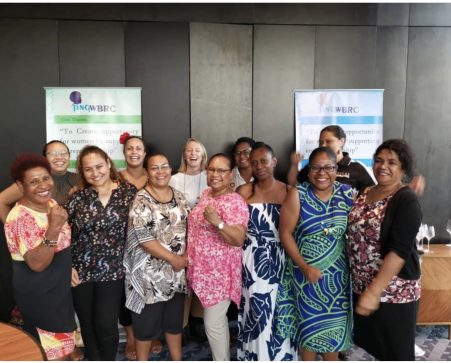
Executive Summary This report presents the findings of a mixed-method survey conducted to examine the operating environment of businesswomen in Papua New Guinea (PNG) in response to the COVID-19 pandemic....
Introduction On June 25, Pakistan reduced its interest rates – for the fifth time in only 100 days – to 7%, almost half the rate of 13.25% just three months...
Beginning in April 2020 CIPE implemented an assessment of marginal economic actors and business and civil society organizations in Ethiopia to assess the initial impacts of COVID-19. Through a series of virtually...
Introduction Bangladesh requires economic restructuring to address both the damage caused by the Covid-19 pandemic and pre-existing structural problems. The non-pharmacological intervention (general holidays) enacted to contain the virus was...
Introduction Bangladesh’s economic recovery from the Covid-19 and global economic shutdown depends on the country’s ability to restart the economy. The curve will be shaped by how quickly the businesses...
Introduction The Cottage, Micro, Small and Medium Enterprises (CMSMEs) sector is a significant emergent source of employment creation in Bangladesh. Due to its small scale of production and fragile entrepreneurship,...
Introduction On 12 June, Pakistan’s annual budget for the fiscal year 2020-21 (beginning 1 July) was presented in Parliament, laying out the government’s policies and strategies for the next twelve...
Executive Summary The COVID-19 pandemic and aftermath may have a transforming impact on the economy of Nepal. Both government and non-state actors have recognized the important role of digital data...
A Study of Chinese Capital Flows to Six Countries Economic development and growth are fueling outbound capital flows from the People’s Republic of China (PRC) to global destinations. One region...