CIPE and the Private Sector’s Role in Cote d’Ivoire’s Fragile Democracy

A street market in Abidjan (Photo: Wikimedia Commons)

A street market in Abidjan (Photo: Wikimedia Commons)

In Cote d’Ivoire, CIPE is engaged in a multi-year program to enhance the capacity of Ivorian private sector associations, particularly in the small and medium enterprises sector (SME), to drive advocacy initiatives for market-oriented policy reforms and a functional democracy.

This new program in Cote d’Ivoire also takes account of the post-conflict nature of the society and the transitional phase of its economy. Recent political developments in Cote d’Ivoire indicate significant challenges to consolidating any democratic gains after the 2011 post-electoral crises. Oddly enough, the administration’s response to these challenges may be favorable to CIPE’s program and mission in Cote d’Ivoire, which would lead to the kind of fundamental impact that will ultimately foster more sustainable democratic gains.

CONTINUE READING

The Role of Information in Planning for Syria’s Post-War Economic Future

SEF

As the world celebrates World Press Freedom Day, it is important to remember that access to information and free and unbiased reporting are vital elements for developing a democracy. According to the 2013 Press Freedom Index published by Reporters Without Borders, Syria is ranked 176th out of 179 countries. Since the beginning of the uprising in March 2011, Syrian authorities have restricted coverage of the unrest and continue to misreport the civil war on state-run TV stations.

My colleague Stephen Rosenlund wrote in his blog post A Bright Light on Syria’s Horizon about CIPE’s work with the Syrian Economic Forum (SEF), a think tank dedicated to building a free, pluralistic, and independent Syrian homeland that rests on a strong economy and ensures a life of freedom and dignity for all citizens. Despite the ongoing civil war and inability to establish a home office inside Syria, SEF has established a robust online presence through its website and social media pages allowing for the exchange of ideas and knowledge.

CONTINUE READING

To Rebalance or Not to Rebalance: That is Not a Question for China

Guozigoui_Bridge_in_Construction_-_China(1)

What is Asian development going to look like in the near future? Given that China remains the region’s leading giant, and one of its fastest-growing economies, the challenges for the new Chinese leadership have became the focal point of recent discussions on this topic.

CONTINUE READING

Expanding Access to Information on Economic Issues in Kyrgyzstan’s Regions

1366684487_14065500

According to Freedom House’s Freedom of the Press 2013 report, Kyrgyzstan’s media environment remains ‘not free’ with little improvement in press freedom over the last ten years.

Though the situation is not as bleak as in the rest of Central Asia, when reporting on politically-sensitive issues in Kyrgyzstan, media outlets practice self-censorship to avoid threats or harassment. When reporting on economic topics, however, journalists often simply lack the skills or background to provide comprehensive analysis. As a result, the Kyrgyz public lacks information about important economic trends, events, and issues. As access to information is a crucial component of free societies, the poor information flow in Kyrgyzstan hinders the country’s democratic and market-economic transition.

CONTINUE READING

Supporting Freedom of the Press in Latin America through Online Media

revista-perspectiva-video

Watch a video about RevistaPerspectiva.com (in English)

In Latin America, many citizens lack a clear understanding of democratic and free-market principles, and strong, charismatic leaders have exploited that knowledge gap. In several countries, notably Cuba, Venezuela, Argentina, and Ecuador, the government exerts significant influence over traditional media outlets through direct ownership, intimidation, or even censorship.

The trend is not a positive one for freedom of the press in the region as governments become more creative in finding ways to muzzle the media. And although some have tried to censor the internet, technological and social progress mean that information consumption in Latin America is increasingly linked to the internet and less to traditional media. The importance of cross-border journalism making use of digital platforms to communicate freely is becoming more and more important in this scenario.

CONTINUE READING

Pakistan’s Changing Media Landscape

pta-block-youtbe-pakistan-wi-tribe-540x389

“Social media has no reins. I believe soon deprived people will learn how to express their feelings effectively through social media” – Shabbir H Kazmi, Senior Business Journalist 

According to the Reporters Without Borders Press Freedom Index, Pakistan stands at 159th position among 179 countries. After independence from British India in 1947, media in Pakistan was fully controlled by the government. Successive dictatorships and also democratic governments used censorship and other means to gag media in the country.

In 2002, after the formation of the Pakistan Electronic Media Regulatory Authority, broadcast media flourished, with large numbers of FM radio stations and TV channels starting to operate throughout the country.

In the past five years of democratic government, the media has become more liberal and vibrant. However, A 2012 report by the Human Rights Commission of Pakistan expressed the rising incidences of violence against the news media.

CONTINUE READING

World Press Freedom Day and the Importance of Access to Information

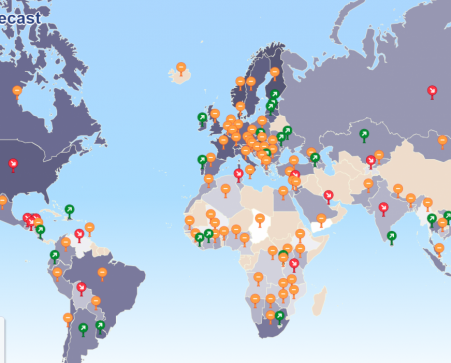
From Reporters Without Borders via The Guardian.

From Reporters Without Borders via The Guardian.

Today is World Press Freedom Day — a day for celebrating the vital role that a free media plays in democracy.

With journalists and media institutions increasingly under attack — both in conflict zones like Syria and in places like Hungary that were once considered consolidated democracies — in 2013 it is more important than ever to focus on  the role that the media plays in a free society. While almost 40 percent of the world’s population now lives in a “free” democracy, just one in six live in societies with a fully free media, according to Freedom House’s most recent Freedom of the Press rankings. Freedom cannot be sustained without a strong, independent, inquisitive, and open media environment. 

CONTINUE READING