
“In democratic countries, the science of association is the mother science; the progress of all the others depends on the progress of that one.”1
Alexis de Tocqueville, Democracy in America
The Center for International Private Enterprise (CIPE) was founded to share the experience of American business associations with counterparts abroad on the frontiers of democracy. The National Endowment for Democracy (NED), of which CIPE is a core institute, was created by Congress in part to facilitate exchange between U.S. private-sector groups and democratic partners abroad and to strengthen cooperation among those committed to democratic pluralism.2 The genius of the NED’s design was to make democracy support a shared civic enterprise among business, labor, and both major political traditions.
The collective action of private-sector associations in turn strengthens democracy by aligning business interests with broader societal goals, enabling organized, transparent engagement which promotes more effective and accountable governance. Throughout its history, CIPE has helped its association partners forge mechanisms for consultation between business and government, turning ad hoc lobbying into structured public-private policy dialogue in places like Moldova, Senegal, and Nigeria. CIPE-supported association coalitions have mobilized private-sector commitments to anti-bribery standards from Armenia to Thailand. CIPE’s chamber and association partners in Kenya participate in the public budgeting cycle, improving government accountability by providing private-sector recommendations and monitoring implementation. CIPE-supported association advocacy has expanded economic opportunity for women entrepreneurs in places like Bangladesh, forged digital governance frameworks in Colombia, and achieved SME policy reforms from Nepal to Jordan to Peru. This is but a small sampling of the impact the associations can achieve through the democratic process.
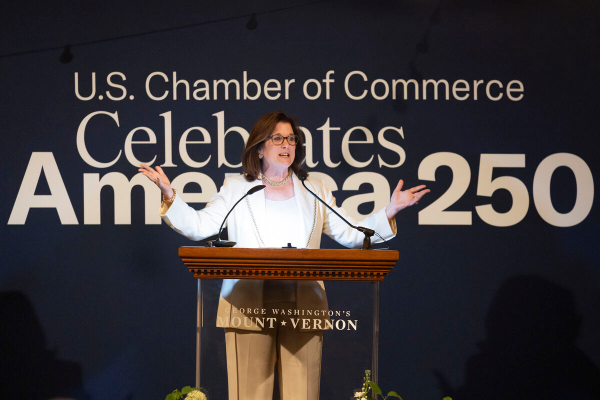
CIPE has a rich history and tradition of democratic practice to draw from, as Americans reflect on 250 years of independence. America’s first associations emerged during colonial times, including the American Philosophical Society, founded by Benjamin Franklin in 1743,2 and the New York Chamber of Commerce established in 1768.3 As the nation expanded, state and local chambers proliferated. The U.S. Chamber of Commerce was established in 1912 to provide American businesses a unified voice in Washington. Two years later the Association of Chamber of Commerce Executives (ACCE) was formed to serve chambers themselves, 4 and in 1920 the American Society of Association Executives (ASAE) was founded as the association of associations.5


Today, the U.S. Chamber is the world’s largest independent business federation,6 and there are more than 7,500 chambers of commerce across the U.S.7 In total, there are more than 60,000 membership associations in the U.S., serving nearly one-third of the country’s population. It can be said that there’s an association for everything in the USA. De Tocqueville pointed out this appetite for association. “Americans of all ages, all conditions, all minds constantly unite. Not only do they have commercial and industrial associations in which all take part, but they also have a thousand other kinds…. [I]f it is a question of bringing to light a truth or developing a sentiment with the support of a great example, they associate.”8

Over the nation’s history, associations have been “the hidden force behind progress.”11 From the frontiers of aerospace to microelectronics, behind every great advancement in society is an association. From Main Street to Wall Street, from the shop floor to the farm field, associations have provided catalytic leadership to industries of all shapes and sizes. From Silicon Valley to the hollers of Appalachia, associations have a unique ability to build community among competitors and forge common purpose. As ASAE puts it, “when associations lead, the world follows.”12
CIPE’s work is inspired and informed by the essential role of these organizations in America’s 250-year experiment with democracy. Since 1983, CIPE has worked with more than 1,000 business associations and chambers of commerce across more than 80 countries around the world. As an affiliate of the U.S. Chamber of Commerce, CIPE brings winning formulas for business advocacy to developing and emerging markets. The U.S. Chamber – the voice of American business – plays a defining role in promoting the free enterprise system. CIPE adapts U.S. Chamber advocacy models to help democratic business groups abroad improve the business enabling and investment environment in ways that benefit both local and American businesses. For instance, CIPE’s collaboration with the Indonesian Chamber of Commerce Institute advances the bilateral commercial relationship between two of the world’s largest democracies.

CIPE infuses American models of excellence and professional standards for chamber and association management in its programs around the world. The U.S. Chamber has shaped and promoted the profession of chamber of commerce and business association management through the Institute of Organization Management, the world’s original training academy for chamber and association professionals. ACCE and ASAE provide certification programs for chamber and association executives, respectively, setting the bar for professional excellence within the field. The expertise and cutting-edge management practices advanced through these programs inspire and inform CIPE’s support for chambers and associations on the front lines of freedom. In Nigeria, CIPE’s Association and Chamber Excellence program, in collaboration with the University of Lagos, provides a cutting-edge executive education for chamber and association professionals – the first course of its kind in West Africa.

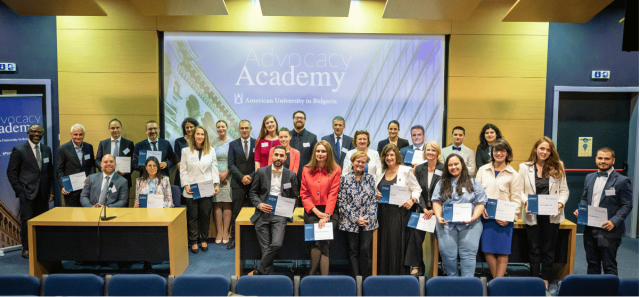
Through its foundation, the U.S. Chamber also promotes civic education and engagement in a variety of ways. The Civic Trust®, for example, is a nonpartisan educational initiative of the U.S. Chamber of Commerce Foundation focused on elevating civics as a national priority with programs that advance and promote civic knowledge in schools, workplaces, and communities.9 CIPE reinforces the role of entrepreneurs and business leaders as civic leaders. The first of its kind Advocacy Academy in Bulgaria, for instance, initiated by the American University in Bulgaria in cooperation with the Bulgarian Entrepreneurial Association and supported by CIPE, aims to create a community of civil servants, business leaders and civil society representatives, equipped in the principles and practices of advocating for policy changes.10 CIPE’s efforts to nurture enterprise ecosystems and create better conditions for business are core to its broader democracy mission in emerging economies.11

As we reflect on America’s semi quincentennial, the role of associations has never been more essential. Recent studies by the U.S. Chamber of Commerce Foundation show that “while civic knowledge is lagging, 82% of Americans believe businesses (and by extension chambers) can help bring people together.”12 Similarly, as levels of trust decline and political polarization increase in societies around the world, the business community – working through chambers and associations – has the power to bridge divides and find common ground. Employers and businesses are the most trusted institutions in society, according to the 2026 Edelman Trust Barometer.13 This spells opportunity for associations as the civic partners and intermediaries of the private sector in the public policymaking arena.
Today, as we have always been, CIPE and its association partners are on the frontlines of freedom, advancing our vision of a world where democracy delivers the freedom and opportunity for all to prosper. Associations in Ukraine, like the Union of Ukrainian Entrepreneurs and neighboring countries, are bulwarks against Russian aggression and fierce advocates for economic reform and business integrity.14 Colombian chambers of commerce set recovery priorities in regions affected by conflict,15 and the Network Association of Women Entrepreneurs for Sustainable Development helps displaced entrepreneurs be successful.16 The Turkish Business Confederation catalyzes local economic development through a vast network of 31 federations and 300+ associations representing over 100,000 businesses in 81 provinces across Turkey.17 In dozens of markets around the world, associations like the Federation of Egyptian Industries are providing market-oriented economic policy leadership through a Smart National Business Agenda, adapted from a methodology pioneered by the U.S. Chamber in the 1970s.18 In the process, our partners are pushing the boundaries of democratic practice and delivering policy innovations that the world has never seen.

De Tocqueville’s observations still ring true today: “There are no countries in which associations are more needed, to prevent the despotism of faction or the arbitrary power of a prince, than those which are democratically constituted.”19 “The morality and intelligence of a democratic people would risk no fewer dangers than its business and its industry if the government came to take the place of associations everywhere.”20 Democracy is a process needing continuous work. As the U.S. Chamber titles its own story, it’s “For the Pursuit.”21 CIPE and its business association partners stand at the vanguard of democratic practice around the world, ensuring the engagement and leadership of business in the biggest questions of our day. For the United States, supporting chambers and associations abroad is a strategic investment in democracy: it strengthens trusted private-sector voices that advance open markets, accountable governance, and more resilient economies aligned with shared prosperity.

On the occasion of America’s 250th anniversary, CIPE deepens its commitment to our founding purpose, our roots in the American business community, and the role of associations in democracy. As we’ve discovered through America’s own experiment with democracy, associations play a vital civic role representing the private sector in the public square, and they thrive in community with their peers. Stay tuned for the launch of an exciting new initiative later this year that will power advances in association leadership through the strength of CIPE’s global network.
[1] https://press.uchicago.edu/Misc/Chicago/805328.html
[2] https://www.amphilsoc.org/
[3] https://www.chambernation.com/history-of-chambers
[4] https://secure.acce.org/pages/about-us/
[5] https://associationsnow.com/2015/04/9-pieces-association-history-didnt-know/
[6] https://www.uschamber.com/about
[7] https://secure.acce.org/pages/chambers/
[8] https://press.uchicago.edu/Misc/Chicago/805328.html
[9] https://civics.uschamberfoundation.org/
[10] https://www.aubg.edu/advocacy-academy/
[11] https://www.cipe.org/newsroom/what-entrepreneurs-teach-us/
[12] https://www.uschamberfoundation.org/civics/250th-business-playbook
[13] https://www.edelman.com/trust/2026/trust-barometer
[14] https://www.cipe.org/projects/eastern-europe/
[15] https://www.cipe.org/projects/colombia/
[16] https://www.cipe.org/blog/2024/04/05/unleashing-potential-the-impact-of-womens-business-associations-in-costa-rica/
[17] https://turkonfed.org/hakkimizda
[18] https://fei.cipe-arabia.org/en
[19] https://www.gutenberg.org/files/815/815-h/815-h.htm
[20] https://press.uchicago.edu/Misc/Chicago/805328.html
[21] https://www.uschamber.com/about/chamber-of-commerce-story-for-the-pursuit /
The U.S. Chamber of Commerce Story: For the Pursuit (YouTube)
Published Date: June 24, 2026