
What does it take to ensure foreign investment benefits a country—not just its investors? The answer depends not only on who invests, but on whether the institutions overseeing those investments are strong and effective. Those conditions help determine whether investment supports transparency, accountability, and long-term economic development—or becomes a source of Corrosive Capital.
As countries across Latin America seek to attract new sources of capital, this question has become increasingly relevant—not only for the region, but also for the United States and its democratic partners. At stake is more than economic growth: the quality of investment will shape the region’s competitiveness, democratic governance, and long-term stability, while influencing the strength of trusted supply chains, economic security, and strategic partnerships across the hemisphere.
Although corrosive capital has historically been associated with authoritarian regimes, this is not the only factor to consider when evaluating an investment’s effects on a country’s gains. CIPE and Peruvian partner, the Group for the Analysis of Development (GRADE), published a study that tells a cautionary tale—they argue that the key question isn’t who is investing, but whether a country’s institutions are strong enough to ensure investment serves the public interest.
A Strategic Infrastructure Megaproject
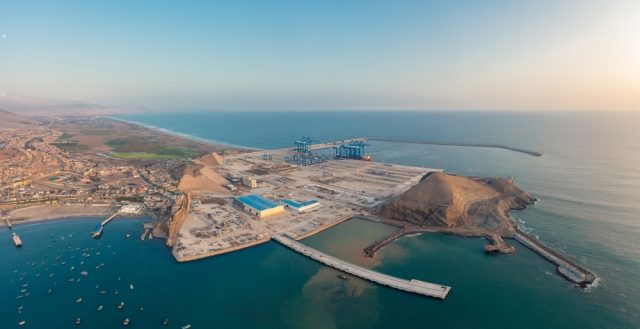
CIPE and GRADE analyzed Peru’s Chancay Megaport project as a case study. With an estimated foreign investment of $3 billion, the port, operating since June 2025, is one of the most ambitious infrastructure projects in the country and an opportunity to position Peru as a hub for the South Pacific.
Research1 shows shipments between Chancay and Shanghai previously required routing through ports in Central America or Mexico, resulting in transit times of 33 days or more. The new direct Chancay–Shanghai route reduces shipping times by approximately 10-12 days and is expected to lower logistics costs by around 20%, with potential implications for the trade dynamics of Chile, Colombia, and Brazil.
The project is more than a port investment: it is part of China’s Belt and Road Initiative (BRI), extending Beijing’s economic and strategic influence in Latin America and beyond.
Balancing Chancay’s Economic Impact
From an economic perspective, the Chancay Megaport presents an opportunity to strengthen Peru’s logistics competitiveness and reinforce its role in global value chains. However, realizing this potential will depend on the country’s ability to adopt policies that link the port’s infrastructure to broader productive and territorial development. Otherwise, the benefits may remain concentrated among actors engaged in foreign trade, without translating into greater economic diversification for Peru or more growth across the Western Hemisphere.
One of the project’s main vulnerabilities is that it is the only port in Peru with private ownership, and that its physical infrastructure is not currently subject to oversight
If these governance dimensions are not adequately addressed, the project could become increasingly vulnerable to risks associated with corrosive capital, including dependence on and favoritism toward a strategic partner, exposure to external tensions, and potential constraints on decision-making autonomy. In this context, visible economic benefits may also help strengthen the investor’s political and economic influence in the recipient country.
“One of the project’s main vulnerabilities lies in the fact that it is the only port in Peru with private ownership and that its physical infrastructure is not currently subject to oversight by Peru’s transport infrastructure regulator, OSITRAN, on the grounds that it is considered private infrastructure,” explained Manuel Grave, lead author of this analysis.
OSITRAN has pursued the matter legally, arguing that Chancay should be classified as public infrastructure operated through private participation—and therefore subject to public regulation.
These concerns are heightened by the dominant role of COSCO Shipping Ports—a Chinese state-owned enterprise that holds a 60% stake in the project and serves as the terminal operator. In this context, the debate extends beyond port ownership to broader questions about transparency, accountability, and the institutional safeguards needed to ensure that the project contributes to Peru’s long-term development objectives.
Preventing Corrosive Capital
One of the report’s central concerns is the role the Peruvian state has played in the development of the project. According to the analysis, the government has primarily acted as a facilitator of foreign investment rather than as a comprehensive strategic planner. While Peru’s laws offer broad guarantees to investors, they do less to ensure large projects become part of a design for regional growth and development.
The challenge is not simply to attract foreign investment, but also to […] ensure that projects like Chancay become drivers of development for Peru’s economy
The Chancay project also illustrates how governance gaps can create opportunities for authoritarian actors to expand their strategic influence in Latin America.
“The challenge is not simply to attract foreign investment, but also to design the regulatory framework and complementary policies needed to ensure that projects like Chancay become drivers of development for Peru’s economy and society in the medium and long term,” said Grave.
The consequences of these challenges aren’t limited to Peru. As strategic infrastructure projects reshape trade routes and economic relations across the Pacific, their institutional design will influence not only national development outcomes but also the balance of economic and political influence in the Western Hemisphere. For the United States and its democratic partners, ensuring that major investments are governed by transparency, accountability, and the rule of law is essential to create a level playing field that enables fair competition, reduces political and regulatory risks for investors, and encourages high-quality private investment, while fostering regional prosperity, strengthening democratic institutions, and preserving resilient supply chains.
Peru’s regional growth vulnerability is of particular concern to CIPE, given its mission to strengthen democracy and prosperity across the globe. The main concern is not foreign investment itself, nor the participation of a foreign state-owned enterprise like China. Rather, there is a danger when national institutions cannot ensure that strategic projects operate under clear rules, independent oversight, and strong accountability mechanisms.
In the case of Chancay, the debate over whether the port should be subject to OSITRAN’s supervision reflects precisely this concern: can Peru ensure these projects advance national development goals rather than primarily serving investors’ commercial or geopolitical priorities?
1 Tinoco-Plasencia, C. J., Quispe-Canales, G. R., Falcón-Tuesta, J. A., & González-Andrade, R. A. (2024). Puerto de Chancay en Latam: Caso Perú 2025 / Port of Chancay in Latam: Perú Case 2025. Paideia XXI, 14(2), 25–33.
Published Date: August 11, 2026