
- Case of Study: The Chancay Megaport - Corrosive and Constructive Capital: A Framework for Stemming the Rising Tide of Authoritarian Capitalism
- Estudio de caso: el megapuerto de Chancay – Capital corrosivo y constructivo: un marco para contener el creciente avance del capitalismo autoritario
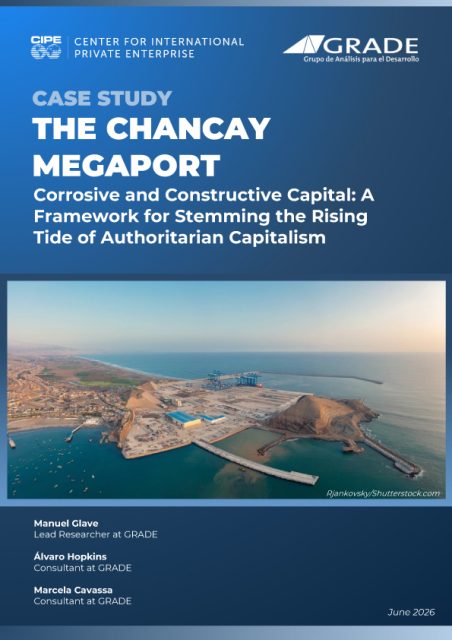 The Chancay megaport is one of the most significant infrastructure projects in Peru’s recent history and a turning point in the country’s integration into trans-Pacific trade. With an estimated investment of approximately $3 billion and majority ownership by a Chinese state-owned enterprise, the project combines high technical complexity, significant territorial impact, and growing geopolitical relevance. Its direct connection to Asia positions Peru as a potential logistics hub for the South Pacific, creating opportunities to reduce transportation costs, boost foreign trade, and attract complementary investments.
This study analyzes the case through the conceptual framework of Corrosive Capital® and constructive capital. However, unlike approaches that tend to associate the corrosive nature of capital primarily with the origin of the investment or the political regime of the investor, the report adopts a broader analytical perspective. Specifically, it argues that the impact of a strategic investment is neither inherently positive nor negative, but rather contingent upon the interaction between the investment and the institutional capacities of the host country. In this sense, the analysis shifts the focus from the origin of capital to the governance vulnerabilities and strengths that shape its effects.
The study highlights how stronger governance in strategic infrastructure can help safeguard resilient supply chains, expand opportunities for responsible private investment, and support long-term economic and strategic interests of democratic allies in the Western Hemisphere.
Published Date: July 22, 2026