
Last month in Yerevan and with the support of UK International Development from the UK government, CIPE brought together policymakers, analysts, legal experts, and private-sector leaders to focus on three areas: corrosive capital, corporate governance, and investment security.
Turning Risk into Insight: Countering Corrosive Capital
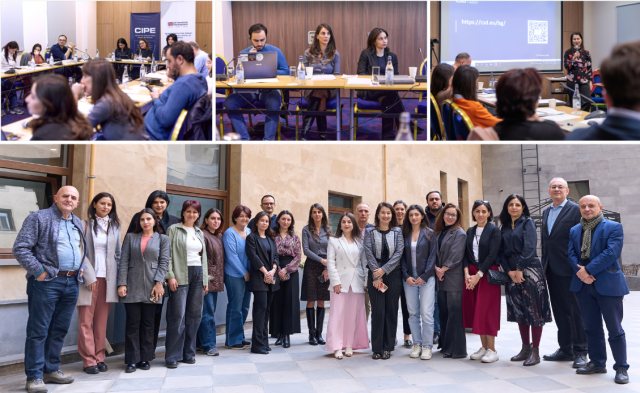
On February 24–25, CIPE partnered with the Center for the Study of Democracy (CSD) to train 23 think tanks from Armenia, Georgia, and Moldova on identifying illicit financial flows, sanctions evasion, and hidden economic influence.
Through practical exercises and real-world data, participants learned to detect trade anomalies, map vulnerabilities, and translate complex analysis into actionable policy insights. The training reinforced the critical role of think tanks in safeguarding economic sovereignty.
Expanding Opportunity: Strengthening Corporate Governance
 On February 26, CIPE and the Corporate Governance Center (CGC) marked the completion of the “Women on Boards” program, launched in November 2025 to prepare Armenian professionals for corporate leadership roles.
At the closing ceremony, participants highlighted gains in leadership skills, boardroom readiness, and professional networks – advancing more effective corporate governance in Armenia. The event featured remarks by H.E. Alexandra Cole, His Majesty’s ambassador to Armenia; Luiza Ayvazyan, CIPE Armenia cuntry director; and Narine Melikyan, director of the Corporate Governance Center.
Data Security and Investment Risk
On February 27, CIPE and Ameria Management Advisory Services convened the Investment Security Working Group to examine data protection and security through screening mechanism.
As discussions underscored, data has become critical infrastructure. While investment brings growth, it can also introduce risks, from data leakage to strategic dependence. Experts noted that Armenia’s legal and technical capacities remain insufficiently integrated into investment screening frameworks.

Strengthening coordination, defining data-sensitive sectors, and applying international best practices emerged as key priorities. Paired with ongoing monitoring, effective screening can mitigate risks, though cyber threats persist.
The discussion convened representatives from government, the private sector, the legal community, and the tech sector to explore how investment screening frameworks can help balance economic openness with national security considerations.
From Dialogue to Resilience
Across all discussions, one message stood out: resilience requires collaboration.
By connecting stakeholders across sectors, CIPE is helping translate analysis into action – supporting a more secure, transparent, and resilient economic future for Armenia, while strengthening market integrity, reducing exposure to illicit finance, and promoting economic growth.
Published Date: March 17, 2026