Development Blog
arabic | russian | spanish | romanian | french

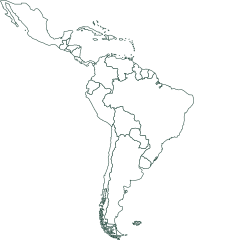
CIPE in Latin America


Weekly Program Highlights

Colombia – The Institute of Political Science (ICP) and Perspectiva magazine held the first of four workshops for opinion-makers led by Mauricio Cardenas, director of Fedesarrollo, and Mauricio Reina, Fedesarrrollo’s lead researcher. The workshop focused on the basic concepts of a market economy and the internationalization of the Colombian economy in a tumultuous political environment. The 24 journalists who attended the event will also participate in an article-writing contest sponsored by Perspectiva magazine.

Ecuador – Mauricio Ramirez, Dean of the Economics Department at the Universidad Espíritu Santo, joined the Ecuadorian Institute of Political Economy (IEEP) radio program, Contrapunto Liberal, to discuss the state of Latin America after the Colombia-Ecuador conflict. On IEEP’s television program, Tribuna Liberal, insurance industry expert Omar Vargas spoke about the government’s involvement in the sector.

Background and Overview

Latin America and the Caribbean has been one of the regions of the world that first made a transition to democracy over twenty years ago. With the exception of Cuba, the region is largely seen as having instituted democratic political processes, though as the events of recent years demonstrate in Haiti, Bolivia, and Venezuela, democracy still has a long ways to go to become truly consolidated in the region, and much institution-strengthening is needed to facilitate beneficial democratic governance between elections.

On the economic front, much work remains to be done on market-based institutions almost everywhere in the region. In the recently published World Economic Forum Growth Competitive Index, the only Latin American country rated among the top 25 competitive countries of the world was Chile, which was ranked 22nd. From there is a steep drop to Mexico, ranked 48th and Costa Rica ranked 50th. Every other Latin American country is ranked below 50. Much of this poor competitive performance can be attributed to the poor quality of public institutions and high levels of corruption in the region as perceived by the business community, states WEF’s chief economist.

Recent years have shown deterioration in the faith of Latin American citizens in market economics to provide prosperity for the poor as much as it has the upper income groups. The most recent Latinobarómetro poll indicates that 71 percent of respondents regionwide believe that their country: “is governed for the benefit of a few powerful interests.” The result of this attitude has been a resurgence in populist political movements throughout the region that seek to dismantle market reforms that were implemented incompletely during the 1990s. This gap in belief that market reforms can strengthen democratic institutions and lead to better life for everyone is particularly acute among disenfranchised indigenous communities in the Andean countries and Central America. If the faith of Latin Americans in democracy is to be restored and strengthened, solutions must be found for improving the economic lot of the majority of citizens.

CIPE’s priorities for Latin American and the Caribbean are designed to focus particular attention on improving the institutions that will allow democracy and economies to flourish. CIPE's network of business associations and think tanks active throughout Latin America, has taken a lead in sustaining reform efforts in the face of severe strains. Partners and participants in various CIPE programs throughout the region have been advocating for institutional reforms that will penetrate deeper into the fabric of society to yield real change.


CIPE Programs in Latin America

Programs and Resources

Center for International Private Enterprise -1155 15th Street NW - Suite 700 - Washington, DC 20005 - Telephone: (202) 721-9200 - Fax: (202) 721-9250 - © 2007